
Welcome to The Right Ride, a video interview series from EverDriven that highlights leaders navigating the most complex challenges in student transportation. Across the series, we speak with district leaders and staff who understand that getting students to school is not a logistical afterthought. It is foundational to safety, stability, and learning.
In this episode, we spoke with a team of Butler County Success Liaisons working with Middletown City Schools in Ohio, including Emily Morgan, Julie Caito, Myla Perry, and Keileigh Bennett, as well as Beth Olthoff, McKinney-Vento Liaison for Middletown City Schools.
The team supports students and families experiencing housing instability across nine schools in a high-poverty district where all students qualify for free and reduced lunch. Their work makes one thing clear: Many of the most significant barriers to attendance never show up in academic data. They show up in daily life.
Understanding a McKinney-Vento Liaison’s Role
McKinney-Vento Success Liaisons operate at the intersection of education and basic needs. Their role is not confined to attendance tracking or compliance. It is centered on identifying and removing the non-academic barriers that prevent students from consistently showing up to school.
In practice, that means building relationships with families, observing patterns that others might miss, and stepping in before small challenges escalate into chronic absenteeism. The barriers families are facing are not always obvious. A student’s absence may trace back to a much larger issue inside the home, or to something small that has gone unnoticed but carries real impact.
When Housing Instability Reshapes Everything
In Middletown, the level of need has grown steadily over time. Liaisons point to rising cost-of-living pressures as a major driver, with families forced to make difficult tradeoffs across basic needs.
One liaison described that reality directly, “Do I feed my family on this small budget that used to get me a lot more or do I pay my electric bill?”
Housing instability rarely happens in isolation. It is often the result of sustained financial strain, where decisions about food, utilities, and transportation all compete at once. As those pressures increase, needs become more complex. Liaisons noted that cases have grown more severe in recent years, while available community resources have become more limited.
The effects show up quickly in schools. Attendance becomes inconsistent. Students carry added stress. Stability becomes harder to maintain.
Transportation as the First Barrier to Solve
Transportation is often the most immediate barrier, but it is also one of the most persistent. Families frequently face competing priorities. Getting a child to school and maintaining employment are not always compatible in the same morning.
As one liaison put it, “It’s between taking my child to school or making it to work.”
Public transportation can help, but it is not always a viable solution for students. Safety concerns, scheduling constraints, and the age of the child all factor into whether those options are realistic.
Distance adds another layer. Students who have been displaced often remain enrolled in their original school, even if they now live outside district boundaries. Without flexible transportation options, attendance becomes difficult to sustain.
Why Flexibility Drives Everything
Serving students experiencing housing instability requires constant adjustment. Circumstances change quickly, often overnight.
Liaisons described how unpredictable a family’s reality can be, “Whatever the plan is when they went to sleep, it is 90% not going to be the reality when they wake up for the day.”
This unpredictability makes flexibility essential. Teams must be ready to respond in real time, often with limited information and evolving needs.
It also requires a specific mindset. Listening without judgment. Staying open to unconventional solutions. Recognizing that how support is delivered matters just as much as what support is provided.
Building Solutions Through Partnership
No single team can solve these challenges alone. Middletown’s approach relies on strong partnerships across the community and within the district.
Liaisons work closely with local organizations, school staff, and transportation providers to identify needs and respond quickly. In many cases, solutions require creative thinking and a willingness to approach problems from a different angle.
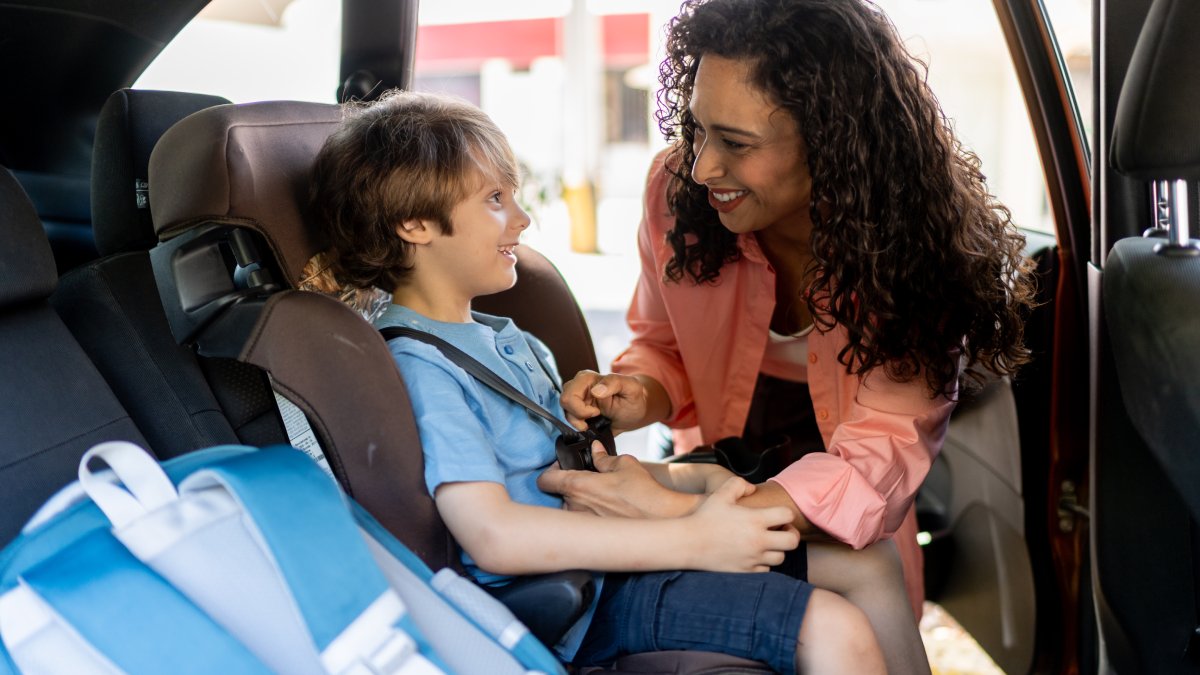
Transportation partnerships play a targeted role. EverDriven is typically used when students are living outside district boundaries or when traditional transportation options cannot meet the need. This approach extends the district’s ability to respond, ensuring that transportation does not become the reason a student misses school.
Measuring Success Beyond Metrics
Success in this work is not defined by a single metric. Attendance is a key indicator, but it is only part of the story. For Middletown’s liaisons, success often starts with something simple: a student is present and able to learn.
As one liaison explained, “The ultimate goal is to make sure that kids are getting to school.”
Longer term, success can look different. In some cases, it means a family no longer needs support. In others, it means a family feels comfortable reaching back out when new challenges arise. That continued connection reflects trust and shows that support systems are working as intended.
What Other Districts Should Understand About Housing Instability
Middletown’s experience highlights how closely transportation and stability are connected. Addressing one without the other leaves gaps.
As one liaison shared: “If you don’t have a way to get to work or to school, how are you going to be able to support yourself? And how are you going to be able to have stable housing, schooling, all of those things?”
Maintaining access to a consistent school environment plays a critical role for students experiencing instability. Familiar teachers, routines, and peer relationships provide a sense of continuity during uncertain periods.
That consistency supports not only attendance, but a student’s ability to feel safe, calm, and ready to learn.
Final Takeaways
From Middletown’s approach, several principles stand out:
- Non-academic barriers often drive attendance challenges
- Transportation is one of the most immediate barriers to address
- Flexibility is essential when serving families experiencing instability
- Partnerships expand what districts can realistically provide
- Success is measured in presence, stability, and trust
At its core, this work is about access. When access is consistent, everything else has a chance to follow.
About the Series
The Right Ride shares perspectives from leaders shaping the future of student transportation. From policy to practice, the series explores how districts are rethinking access, safety, and student experience.
To learn more about building a transportation strategy designed for today’s realities, connect with EverDriven.