Welcome to The Right Ride, a video interview series from EverDriven that highlights the people living different parts of the student transportation journey. In this episode, we sat down with Glenna Wright-Gallo, Vice President of the Office of Strategic Research and Policy at Everway, a global education and workplace technology company.
Glenna’s path to this work runs through nearly every level of the education system. She started her career as a special education teacher working with middle school students, then moved into state leadership as Utah’s State Director of Education and later as Washington’s Assistant Superintendent of Special Education. Most recently, she served as Assistant Secretary of Education at the U.S. Department of Education, where she led the Office of Special Education and Rehabilitative Services. That range of experience, from the classroom to the federal level, shapes how she thinks about transportation today.
Glenna also serves as a judge for EverDriven’s Modern Student Transportation Awards, reviewing the strategies and outcomes districts submit each year to select winners.
You can watch the full interview with Glenna here.
Transportation as a Vehicle for Independence
Glenna starts from a simple premise: transportation is not separate from learning, it is a condition for it. She points out that students, including students with disabilities, need consistent access to transportation to build the independence and proficiency that carry into adulthood. That belief connects directly to her work, where the goal is to combine policy expertise with practical technology.
She names a pattern she sees across the industry: transportation is often treated as something to take for granted rather than a lever for outcomes. Glenna’s question for district leaders is not only how to give students access, but how to use that access to set them up for success, whether that means expanding the pool of qualified drivers, reducing friction for staff, or using data to guide decisions across funding and staffing.
Designing Transportation Around Student Need, Not Around Limitations
Glenna says the connection between federal regulations and transportation is explicit. IDEA sets transportation as a related service and a disability rights issue. McKinney-Vento sets similar expectations for students experiencing homelessness. What often gets missed, she says, is the broader picture: least restrictive environment, access to the community, and the chance to build independence outside the classroom.
Glenna pushes back on treating transportation as a compliance task handled in isolation. Her recommendation is to design transportation around access, participation, and student need as a connected system rather than a box to check.
Bringing Transportation to the Table Earlier
Transportation teams are frequently the last group brought into special education planning conversations, even though their input could shape better outcomes from the start. Glenna acknowledges the tension district leaders face: inviting transportation into every IEP meeting is not realistic, but leaving transportation out of key decision points has its own costs.
Her suggestion is to identify the moments where transportation input matters most, whether that is setting up a new program or choosing a program location, and build a feedback loop so input leads to visible change. She is candid about a gap many districts share: asking for feedback once and never closing the loop on what happened as a result. Glenna frames this as an opportunity for special education leaders and transportation directors to explicitly acknowledge each other’s expertise and coordinate as partners rather than working in separate lanes.
What She Looks for as a Modern Student Transportation Awards Judge
As a judge for last year’s awards, Glenna reviewed submissions with a specific lens. She looks first at access and equity: how technology and leadership decisions expanded who could get to school and how reliably. From there, she wants to see data, not just a description of what worked, but evidence of what a district tried, what it learned, and what it changed as a result.
The third thing she looks for is personal connection. Glenna wants to understand how a strategy changed something in a student’s life, whether that shows up in communication, independence, or a family’s ability to stay engaged with a school. For her, the strongest submissions connect a leader’s strategy to a specific, identifiable outcome for a student or family.
Why Fragmentation Cannot Be the Default
Glenna closes with a challenge to the field: stop treating fragmented systems as inevitable. She argues that change happens when leaders use research and data, listen to families and students, coordinate across agencies, and follow through on implementation. The research and evidence already point to what works. What is missing, in her view, is the follow-through.
She returns to the idea that accessibility has to be built into education and workforce systems by design, not added as an afterthought. As Glenna puts it, students cannot afford to wait for adults to get the system right.
Nominate Your District for the 2026 Modern Student Transportation Awards
The Modern Student Transportation Awards, presented by EverDriven, recognize district leaders using innovation, compassion, and technology to remove barriers to education and get students to school safely and reliably. Nominations are open across four categories, including Safety & Reliability and Top Innovator, and close October 9. Submit a nomination here.
Key Takeaways
- Transportation is a condition for learning, not a separate logistics function. Consistent access supports independence and long-term outcomes, not just attendance.
- IDEA and McKinney-Vento both address transportation directly, and least restrictive environment principles extend beyond the classroom into how students get to and from school.
- Transportation teams add the most value when they are included at key decision points, supported by a genuine feedback loop rather than one-time input.
- Strong Modern Student Transportation Awards submissions pair a clear equity or access strategy with data and a specific, personal outcome for a student or family.
- Lasting change requires leaders to coordinate across systems and follow through on what the research already shows works.
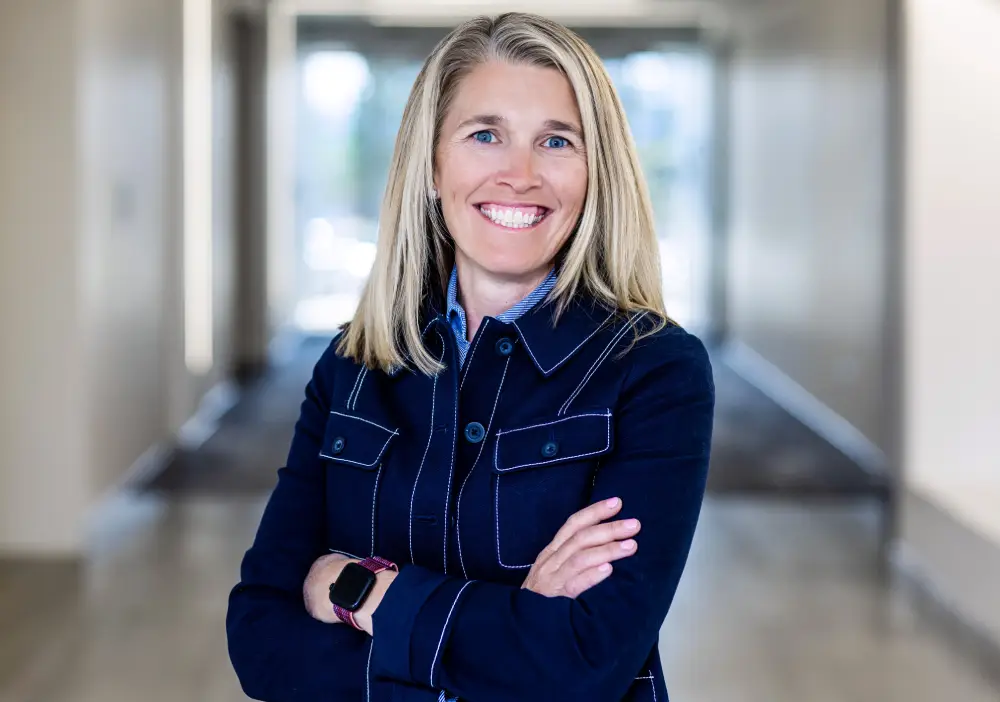
Courtney Pallotta is an energetic, customer-driven marketing executive with more than 20 years of experience leading go-to-market strategy, branding, product marketing, demand generation, and customer advocacy for startup and growth-stage companies. As CMO at EverDriven, she leads the GTM team in delivering modern, student-centered transportation solutions that meet every student’s unique needs.
Courtney has built and scaled marketing functions across some of the most dynamic enterprise technology categories, from data warehousing and analytics to cloud infrastructure, data privacy, and SaaS. She has taken companies from stealth through IPO, led acquisitions, launched open-source platforms, and consistently built marketing engines that drive pipeline and market position. Along the way, she has developed a deep belief that the best marketing is both simple and authentic, and that listening to customers is the foundation for great products and lasting communities.
Outside of EverDriven, Courtney serves as a Board Member at the Gilliam Center for Entrepreneurship, where she mentors the next generation of business leaders.