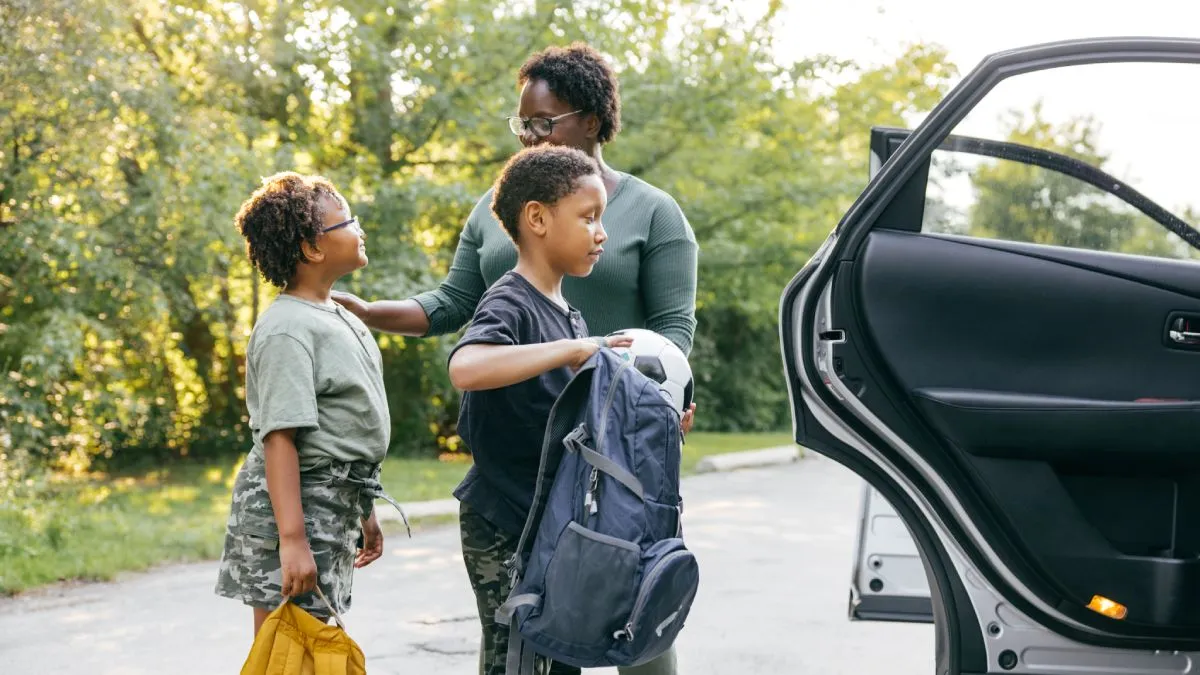

Ensuring equal access to education is a challenge, especially for students experiencing homelessness or frequent changes in their living situation. The McKinney-Vento Act plays a critical role in removing barriers—like transportation—so students can attend school consistently.
In this blog, we address the most frequently asked questions surrounding McKinney-Vento transportation and explore how your school district can effectively support the evolving needs of students experiencing homelessness.
What is the McKinney-Vento Act?
The McKinney-Vento Act, enacted in 1987 and reauthorized under the Every Student Succeeds Act (ESSA) in 2015, ensures that children and youth experiencing homelessness have access to essential services such as transportation, tutoring, and school nutrition. Each state and school district are required to appoint a McKinney-Vento liaison to oversee implementation and affirm that the purpose of the act is carried out appropriately and effectively.
Who qualifies for transportation under the McKinney-Vento Act?
Transportation assistance is provided to students who meet the legal definition of homelessness and face barriers to attending their school of origin. According to the National Center for Homeless Education, a student is considered homeless if they lack a fixed, regular, and adequate nighttime residence, which includes the following:
- Sharing housing due to economic hardship or loss of housing
- Living in motels, hotels, trailer parks, or campgrounds
- Staying in emergency or transitional shelters
- Sleeping in public or private places unfit for human habitation (cars, parks, abandoned buildings, etc.)
- Migratory and living in any of the above circumstances
- Unaccompanied youth (students not in the custody of a parent or legal guardian)
What responsibilities do school districts have under the McKinney-Vento Act regarding transportation?
Under the McKinney-Vento Act (42 U.S.C. § 11431 et seq.), school districts have responsibilities to ensure students experiencing homelessness have access to school without barriers, including immediate transportation. These responsibilities include:
- Provide immediate transportation to ensure students can attend school, even if arise.
- Ensure transportation is arranged promptly, even before official homelessness verification.
- Coordinate with other districts when a student moves across district lines to minimize disruptions.
- Explore flexible solutions for students with inconsistent housing situations.
More details on these responsibilities are provided by NCHE and SchoolHouse Connection.
What is a “school of origin,” and why does it matter?
The s the school a student attended before becoming homeless or the last school they were enrolled in. Since frequent moves can disrupt education, the McKinney-Vento Act allows students to remain in their school of origin if it is in their best interest. If so, the school district must provide transportation to ensure consistent attendance.
However, if attending the school of origin is not in the student’s best interest, transportation must be provided to the school that best meets their needs—including specialty schools or a school closer to their current residence.
How should districts determine if it is in the student’s best interest to remain at their school of origin?
McKinney-Vento liaisons and school officials should consider:
- The student’s preference, especially for older youth.
- The impact changing schools has on the student’s academics, social connections, and emotional well-being.
- Distance and travel time between the student’s current location and the school of origin.
- Special programs or services the student may need that are only available at the school of origin.
Decisions should always be made with the student’s stability and academic success in mind.
What transportation options can districts use to comply with McKinney-Vento?
Districts can meet these students’ evolving transportation needs using a variety of methods, including:
- School buses (including rerouting existing buses)
- District vans
- Alternative transportation providers (contracted services for nontraditional routing)
- Public transportation (with free or reduced-cost passes)
- Parent or youth reimbursement programs (if agreed upon and practical)
Each district should explore cost-effective and flexible solutions to ensure students have reliable access to school.
Who pays for McKinney-Vento transportation?
Funding for transportation can come from multiple sources, including:
- Title I funds (federal funding for students in poverty)
- State and local McKinney-Vento grants
- District budgets
- Cost-sharing agreements between districts if a student moves across district boundaries
Districts can work with their McKinney-Vento liaison and state education agencies to explore available funding sources.
What should districts do if a student’s living situation keeps changing?
Homelessness can bring unpredictability, and students may experience frequent moves. Consistent transportation options help maintain stability, but reassessing best interest determinations may be necessary if a student moves farther from their school of origin. Collaboration with other districts and community organizations can also support smoother transitions.
Flexibility is key in ensuring students can remain engaged in school despite housing instability.
What are common transportation barriers for McKinney-Vento students?
According to School House Connection, students experiencing homelessness often struggle with:
- Lack of documentation or enrollment barriers
- leading to absenteeism
- Lack of access to reliable transportation
- Distance between current housing and school
- Poor health, fatigue, or hunger
- Emotional or mental health challenges
School districts play a critical role in addressing these barriers by coordinating transportation services and ensuring students have access to consistent and reliable transit options.
How can school districts identify students who qualify for McKinney-Vento transportation?
Proactively identifying eligible students is key to ensuring they receive the support they need. Here are some steps districts can take:
Raise Awareness:
- Provide clear information on McKinney-Vento services during school registration.
- Share resources with school staff, shelters, and community organizations.
- Use multiple channels (school websites, newsletters, public bulletins) to inform families.
Build Trust:
- Hold district information meetings where families can ask questions.
- Designate a point of contact to provide a judgment-free space for families to share their housing situation.
- Maintain confidentiality and transparency about available options.
Why is McKinney-Vento transportation so important?
Transportation services under the McKinney-Vento Act do more than just get students to school—they provide stability, continuity, and a sense of normalcy for children facing uncertain living situations. By ensuring students can attend school regularly, districts help break cycles of homelessness and empower students to focus on learning.
Need more guidance on McKinney-Vento transportation in your district? Reach out to your McKinney-Vento liaison or explore partnerships with reliable alternative transportation providers like EverDriven to support your students.

Danielle Press is a results-driven sales and growth executive with nearly two decades of experience building high-performing teams, scaling revenue, and transforming how organizations go to market. As Chief Growth Officer at EverDriven, she leads the company’s growth strategy with the same intensity and people-first mindset that has defined her career.
Danielle’s path to the C-suite is a masterclass in earning it from the ground up. She began her career in field sales and progressed through coaching, inside sales leadership, and regional management, taking on increasingly complex roles and delivering consistent growth at every stage. Among her most notable achievements: she took what was ranked the worst sales team in the country to the best performing, by focusing relentlessly on talent development, sales acumen, and culture. In a later role, she built a net-new inside sales motion that generated 35% of all new business revenue while cutting customer acquisition costs in half.
At the peak of her pre-EverDriven career, Danielle drove some of the most significant commercial milestones in her organization’s history, growing total revenue 5x, net revenue 7x, improving net retention by 40%, and closing the largest deal in company history by a factor of five.
Beyond her professional accomplishments, Danielle is a passionate advocate for women in sales leadership, having spent nearly five years as a mentor with #GirlsClub, a program dedicated to developing and certifying the next generation of female sales managers.