
Key Takeaways
- DoE standards establish a vital safety baseline.
- EverDriven meets and exceeds those requirements with enhanced safety protocols, specialized driver and monitor education, and advanced technology.
- TNC-style providers may meet the baseline but vary in training depth, monitoring, and support for high-need students.
- EverDriven combines safety, service, and technology with a human touch that keeps students at the center.
When it comes to student transportation, safety is foundational. Nothing matters more than getting students to school safely and reliably. To that end, student transportation is governed by a combination of Department of Education guidance and other state and local regulatory bodies, including Departments of Motor Vehicles and Public Safety agencies. . These regulations are interpreted on a state-by-state basis, based on local requirements and laws.
But some providers operate under Transportation Network Company (TNC) frameworks originally designed for general passenger transportation, not education-specific environments. TNCs are ride-sharing platforms that connect drivers with passengers through online platforms like smartphone apps. While these companies take some measures to comply with DoE standards, they are not purpose-built around the unique needs of students, especially those with disabilities, McKinney-Vento protections, or IEP requirements.
This is not the case with EverDriven. Our operational standards align with 100% of applicable state-level and education-related regulatory requirements for small-capacity student transportation. Our model is built specifically for students and districts—not adapted from consumer ride-share.
This article compares how EverDriven and TNC-style providers approach the same DoE-aligned requirements, showing how EverDriven not only meets but exceeds these standards, setting a new bar for safety in student transportation.
EverDriven vs. TNC Compliance Comparison at a Glance
| Category | EverDriven | DoE Standards | TNC-Style Providers |
|---|---|---|---|
| Drug & Alcohol Testing | 100% pre-service drug testing; EverDriven is enrolled into a drug and alcohol consortium | Requires background checks and driver vetting based on state and district policies | Must comply with a zero-tolerance policy for intoxicating substances that involves suspending a driver upon a complaint until an investigation is completed |
| Additional Driver Vetting | Multi-layered background checks (National Sex Offender Registry, motor vehicle record reviews) with continuous monitoring for backgrounds | Requires background checks and driver vetting based on state and district policies | May meet minimum state checks |
| Ongoing Education | 100% receive continued education in safety, defensive driving, and sensitivity education | Requires pre-service and, in some cases, ongoing training per state/district guidelines | Training or education requirements vary; generally recommend additional training rather than require it; not always specialized for student safety or special needs; regulated by the PUC |
| Vehicle Safety | 100% of vehicles pass annual safety inspections by certified third party; pre-trip inspection protocols; equipment compliance; in-vehicle cameras (district opt-in); telematics monitoring | Annual certified inspections required for school vehicles | May meet basic inspection rules; oversight and frequency differ; regulated by the PUC |
| Trip Monitoring | In-ride cameras (district opt-in), telematics. VIP app provides real-time tracking for parents and school staff; TripCentral provides visibility for districts. Telematics data is used to improve the safety of students and routes. | Some districts use GPS or telematics | GPS and telematics are common; in-cabin monitoring and parent access vary. Telematics data is rarely used to adjust service. |
| Service for Students With Disabilities | Fully supports district IDEA compliance through coordination with transportation and special needs staff, ensuring student IEP requirements are satisfied. 41.87% of districts have selected to support students with disabilities by using monitors or specialized equipment in vehicles | Must comply with IDEA and state requirements | Service for students with special needs is not always guaranteed; this is included under special considerations |
| Driver Consistency | 83.62% of rides completed by same driver for students with disabilities; this is included as a standard service | Not prescribed | Consistent drivers and specialized equipment not always guaranteed; this often involves additional costs |
| Service Provider Accountability | Service provider model adds structured oversight, language proficiency standards, compliance checks, performance coaching, and district-aligned accountability layers | Not prescribed | Direct-to-driver marketplace models may not include additional oversight layers beyond platform compliance |
| Operational Reliability | 99.99% of trips completed without accident; 90.36% within five minutes of scheduled drop-off | Reliability varies by district resources | On-time performance varies |
| Regulatory Alignment | 100% compliance with all DoE-aligned requirements for small-capacity vehicles; designed around education-sector standards | Sets and enforces baseline safety and operational requirements | Regulated under state and local rules by the PUC; may not align fully with education-specific compliance |
A Purpose-Built Safety Model
EverDriven’s model is built specifically with students at the center—aligning with 100% of DoE-aligned regulations and then extending beyond them with structured operational oversight.
Unlike models built around general consumer ride-share, EverDriven operates through a service provider framework that adds an additional accountability layer between individual drivers and districts. That layer enables:
- Standardized compliance enforcement
- Structured training requirements
- Performance monitoring and coaching
- Language proficiency standards
- District-aligned documentation and reporting
TNC-style providers often position direct-to-driver models as simpler. In practice, fewer oversight layers can limit consistency and accountability across drivers and regions. EverDriven takes a different approach. Safety is driven by clear standards, consistent oversight, and measurable accountability across every ride.
SafeOps: Raising the Bar Even Higher
EverDriven recently launched SafeOps, a dedicated safety excellence council designed to scale best practices consistently across the 36 states we serve. With a 99.99% accident-free rate across more than two million trips in the past year, SafeOps builds a continuous improvement framework across three pillars:
Operational Excellence
- Enhanced background verification and continuous monitoring
- Standardized pre-trip inspections
- Structured incident response protocols
Technology Integration
- District opt-in in-vehicle cameras (deployed in nearly 50% of vehicles within the first year)
- Real-time GPS tracking and route optimization
- Telematics monitoring that flags risky driving behaviors, such as speeding, to proactively improve safety outcomes
Education and Support
- Comprehensive driver and monitor education
- Targeted training to support students with diverse needs, delivered in coordination with district expectations
- Compliance education aligned with federal and state requirements
- Ongoing service provider coaching
The Technology Advantage
DoE standards ensure safety and compliance. EverDriven adds real-time visibility and operational control using smart technology to keep parents, schools, and students connected and safe. These innovations include:
- AI-powered cameras, which monitor each ride from all angles.
- The EverDriven VIP app that keeps parents informed with GPS tracking and trip updates.
- EverDriven’s TripCentral, which centralizes trip requests and monitoring.
- Telematics devices, which analyze driving behavior and vehicle performance, enabling proactive safety improvements rather than reactive reporting.
Why the EverDriven Safety Difference Matters
Some TNC-style providers—including those marketing themselves for student transportation — can meet parts of the DoE baseline. EverDriven builds an education-first safety model on top of those foundations.
The difference is consistency. EverDriven applies the same standards, oversight, and accountability across every ride, every driver, and every district.
In 12 months, EverDriven delivered 99.99% of trips without any accidents or incidents, pairing compliance with industry-leading safety, transparency, and reliability.
Wrapping Up
Let’s stop settling for “good enough” when it comes to transporting students. EverDriven proves there’s a smarter, safer, and more accountable way forward.
If you’re a school district exploring safer alternatives, the numbers speak for themselves—and EverDriven is ready to deliver.
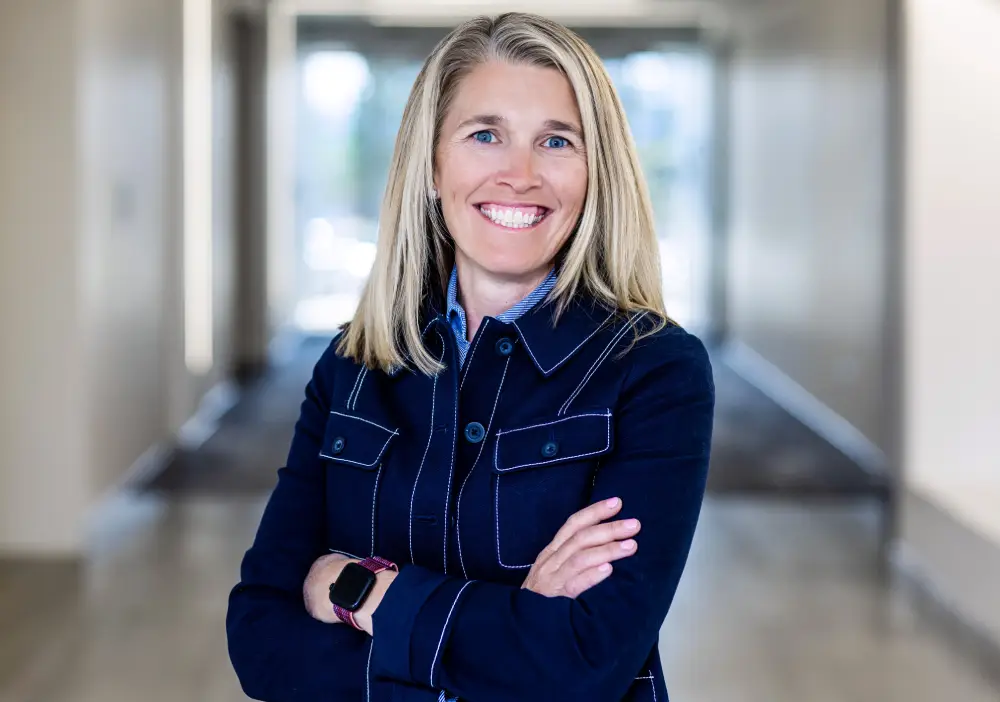
Courtney Pallotta is an energetic, customer-driven marketing executive with more than 20 years of experience leading go-to-market strategy, branding, product marketing, demand generation, and customer advocacy for startup and growth-stage companies. As CMO at EverDriven, she leads the GTM team in delivering modern, student-centered transportation solutions that meet every student’s unique needs.
Courtney has built and scaled marketing functions across some of the most dynamic enterprise technology categories, from data warehousing and analytics to cloud infrastructure, data privacy, and SaaS. She has taken companies from stealth through IPO, led acquisitions, launched open-source platforms, and consistently built marketing engines that drive pipeline and market position. Along the way, she has developed a deep belief that the best marketing is both simple and authentic, and that listening to customers is the foundation for great products and lasting communities.
Outside of EverDriven, Courtney serves as a Board Member at the Gilliam Center for Entrepreneurship, where she mentors the next generation of business leaders.