
Jessica Smith is the McKinney-Vento coordinator and foster care liaison for Kansas City, Kansas Public Schools. Through modern transportation, she helps hundreds of students who are experiencing housing instability or are in foster care get to and from school every day.
We sat down with Smith to learn from her eight years of experience. Her guidance and perspective can empower your school district to both comply with federal law and make a difference to students and families:
How can you help ensure that families know their rights?
It’s important to do professional development with school staff around eligibility for McKinney-Vento. When the registrar’s office and school secretaries know about McKinney-Vento legislation, they can point families in the right direction when they need help. If a family doesn’t have proof of address, a secretary can ask why. If the mother says, “We had a fire and now we’re at grandma’s house over the state line in Missouri,” the secretary can send them to see us for transportation support.
Families facing homelessness manage so many challenges at once. How do you help fast-track them to get support?
The fewer barriers you put into place for families, the more likely they are to benefit from the help they need and deserve as soon as possible. It’s very important that districts don’t require proof of homelessness because what proof do you have that you’re homeless?
Likewise, make it as easy as possible for them to meet their McKinney-Vento liaison. If you require, for example, that a family receive a referral from a social worker and then fill out a Google doc, you’re making it difficult for families to work with you. That’s why we have walk-in hours from 9:00 a.m. to noon. Anyone can come right in. We are in an administrative building, so we will also meet families at our schools if it’s easier for them.
Can you talk about how The McKinney-Vento Homeless Assistance Act defines homelessness as compared to other federal legislation?
When you consider homelessness, you have to understand that McKinney-Vento legislation defines homelessness differently than the U.S. Department of Housing and Urban Development (HUD), even though they’re both federal programs. I want to scream it from the mountaintops! Because the definitions do not align, families who benefit from McKinney-Vento support are often not eligible for HUD assistance.
If you qualify as “chronically homeless” as defined by HUD, then you qualify for rapid rehousing. HUD defines “chronically homeless” as being continuously homeless for a year or experiencing repeated periods of homelessness over the last two years. Again, most of our families do not qualify because most mothers are not “chronically homeless.” Even if a mother can’t maintain the home she finds for her children long-term, she’s going to find another one and figure it out quickly. She might be homeless again in four months, but she may still not qualify as “chronically homeless.”
What’s the first thing you do for any family when they walk through your doors?
The biggest thing—and it’s so cheesy—is just being there. Listening. It helps to be this little, tiny light of hope; it’s not a giant hope because we don’t have a lot of resources. We’re also understanding because we have parents come in who have already talked to 10 different people who don’t know what McKinney-Vento is and don’t understand if they will qualify for support. They’re frustrated, and I listen and then say, “It’s okay. I’m going to help you. We just have to figure out how to help you.” When you have stable housing, you don’t realize the level of panic a parent experiences not knowing where their child is going to sleep.
As providers, we have to first and foremost give them understanding and hope. If a mother can put their child in school all day, she’s not worried about them. She can go and handle her business. She doesn’t have to worry about gas money.
I’m extremely transparent with everyone. I can get your child to and from school and give you some supplies: socks, underwear, and book bags. I cannot get families housing because I don’t have that resource. But the things that I can do for them, I always do them. Oftentimes, families are so appreciative.
How do you help students navigate the challenges of transportation while in foster care?
Foster students have the right to stay at their school of origin, and I manage transportation for them too. It’s challenging and complex. Foster care caseworkers are overworked. I always advocate for students in foster care the same way I do for McKinney-Vento students.
If foster parents are in a neighboring district, they often want their foster children to go to school near their house. I do what’s best for the child always. The goal is to reunify students with their families. The continuity of the same school, the same teacher, and the same friends is helpful in the interim. Why would I make them switch schools if we could just transport them to school quickly?
Again, you do what is in the best interest of the student. Is it in the best interest of a kindergartener to be transported 45 minutes every day? Probably not. But is it in the best interest of a senior who has two months left in school to be transported 45 minutes every day? Absolutely.
What advice do you have for McKinney-Vento liaisons who have to advocate for students every day?
You need to know the law. People will argue with you — whether it’s the principal in the school or the higher-ups saying that they’re not going to pay for transportation. You need to be able to copy and paste the law into an email if you need to. We cost-share across districts, and that comes into play in those conflicts, too.
What do you look for in a transportation partner?
The availability of technology is huge for us. It’s great how we can put things into the district portal with EverDriven. The EverDriven VIP app is also great for families, especially because it allows parents to track their kids. It’s also fantastic to have a personal point of contact to speak to regularly. That makes a big difference overall.
This is a tough job—an emotional job. What’s your advice for managing the challenges without getting burned out?
Guard your heart because this is hard work. Bring yourself back to the reality: My job is to make sure they get to school. There are a lot of other things we do, but they are just extras. Our job is to get them back to school. A former supervisor of mine in social work also used to say, “On Fridays, take the long way home.” It helps you transition into the weekend, so you can go back to work and help these kids again on Monday.
McKinney-Vento and foster care liaisons like Smith are on the front lines of ensuring equity in school districts across the country. The role is as challenging as it is rewarding, even more so given the rise in homelessness rates across the country. If you’re looking for additional help managing transportation for students, please reach out to us today.
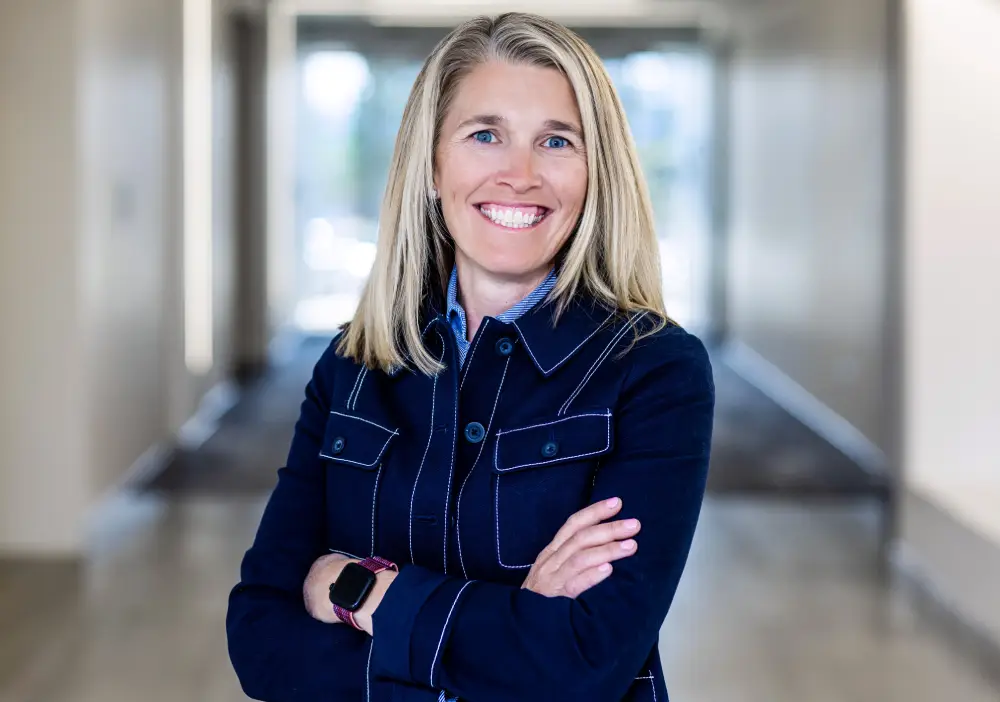
Courtney Pallotta is an energetic, customer-driven marketing executive with more than 20 years of experience leading go-to-market strategy, branding, product marketing, demand generation, and customer advocacy for startup and growth-stage companies. As CMO at EverDriven, she leads the GTM team in delivering modern, student-centered transportation solutions that meet every student’s unique needs.
Courtney has built and scaled marketing functions across some of the most dynamic enterprise technology categories, from data warehousing and analytics to cloud infrastructure, data privacy, and SaaS. She has taken companies from stealth through IPO, led acquisitions, launched open-source platforms, and consistently built marketing engines that drive pipeline and market position. Along the way, she has developed a deep belief that the best marketing is both simple and authentic, and that listening to customers is the foundation for great products and lasting communities.
Outside of EverDriven, Courtney serves as a Board Member at the Gilliam Center for Entrepreneurship, where she mentors the next generation of business leaders.