
Welcome to The Right Ride, a video interview series from EverDriven that highlights leaders navigating the most complex challenges in student transportation. Across the series, we speak with district leaders, educators, and public servants who understand that getting students to school is not a logistical afterthought. It is foundational to safety, equity, and learning.
In this episode, we sat down with David Fifarek, Senior Director of Business and Transportation Services at Milwaukee Public Schools. David’s path into transportation leadership was not linear. It was driven by a commitment to public service and shaped by one of the most complex school choice environments in the country.
His perspective makes one thing clear. Transportation is about preserving access in a system defined by mobility, choice, and instability.
From Public Service to Transportation Leadership
[custom_tag html_tag=”div” class=”” style=”text-align: center;”][/custom_tag]
David did not begin his career intending to manage one of the largest and most complex transportation systems in Wisconsin. He started in local government, working in the Common Council and exploring the legislative side of public service.
Over time, he realized he wanted to stay close to impact without being pulled into politics. Public administration offered that bridge. A supervisory role in transportation at Milwaukee Public Schools followed, and the work grew from there.
What started as an operational position became a leadership role because transportation sits at the intersection of equity, access, and execution. It touches every family. It reveals where systems work and where they break down.
Transportation leadership, in David’s case, was learned through service. Not design.
A District Built on Choice and Movement
[custom_tag html_tag=”div” class=”” style=”text-align: center;”][/custom_tag]
Milwaukee Public Schools operates inside a uniquely competitive and choice-driven environment. Wisconsin was the birthplace of the modern private school voucher program, and Milwaukee has lived with school choice for nearly three decades.
Public and non-public schools coexist. Families choose programs, not just buildings. Enrollment does not follow neighborhood boundaries. Students often travel across the city to attend language immersion schools, Montessori programs, IB schools, or gifted and talented programs.
Transportation makes that possible.
Historically, Milwaukee even used busing as a tool for school integration following Brown v. Board of Education. Over time, that legacy evolved into an equity-driven model designed to ensure that access to high-quality programs is not determined by where a family lives.
The result is a complex network. Milwaukee stretches long from north to south. Routes vary in density. Some move volume efficiently. Others must reach students across long distances with precision. Buses, vans, and alternative vehicles all play a role. Not because the system is fragmented, but because access demands flexibility.
When Mobility Meets Housing Instability
[custom_tag html_tag=”div” class=”” style=”text-align: center;”][/custom_tag]
For students experiencing housing instability, transportation challenges compound quickly. Unhoused students, particularly younger children, may not know the neighborhoods they are moving through. Transfers introduce confusion. Standard transit assumes familiarity that many families do not have.
In Milwaukee, yellow buses and smaller-capacity vehicles provide something different. They offer consistency. They offer known pickup points. Over time, that personalized attention has become part of the district’s standard of care.
Making that work depends on communication. Central offices cannot manage every family interaction. Schools do.
Office staff, social workers, and other frontline personnel are trained to recognize when access becomes a barrier. They help families understand options that may not be obvious during moments of disruption. Transportation becomes a support system rather than a last-mile problem.
Absenteeism Starts With Access
[custom_tag html_tag=”div” class=”” style=”text-align: center;”][/custom_tag]
Chronic absenteeism is often discussed as an academic issue. David sees it as an access issue first.
Achievement depends on students being present. Transportation teams may not teach reading or math, but they influence the health of the entire system. Attendance affects funding, staffing, and long-term outcomes for districts and students alike.
In Milwaukee, the response focuses on two principles.
First, early identification. When families become displaced or routes change, delays matter. Moving from one mile to ten miles can quickly become a barrier without intervention.
Second, diversification. A transportation model with multiple options allows districts to respond with urgency instead of waiting for perfect conditions. Once service is in place, effectiveness is monitored to ensure reliability improves rather than erodes.
Absenteeism is not a downstream failure. It is an upstream design signal.
Designing the Right Vehicle for the Need
[custom_tag html_tag=”div” class=”” style=”text-align: center;”][/custom_tag]
A common misconception is that smaller vehicles are reserved for specific populations. David reframes that assumption. Vehicle choice is driven by density.
Yellow buses excel at moving large numbers of students efficiently. They remain essential. But when only a handful of students need to reach a specialized program miles away, deploying a full-size bus is neither practical nor equitable.
Low-density routes exist for many reasons. Housing instability. Special education needs. Unique programs with limited enrollment. Smaller-capacity vehicles make those routes viable while preserving access.
Equity does not require identical solutions. It requires the right solution for the context.
Final Takeaways
From Milwaukee’s experience, several principles stand out:
- Access precedes achievement. Transportation is an academic enabler.
- Choice increases mobility. Mobility demands flexible systems.
- Housing instability amplifies risk. Personalized transportation reduces it.
- Density determines mode. Vehicle choice is operational, not personal.
- Communication closes gaps. Schools are the frontline.
- Speed matters. Delays turn disruption into absence.
Transportation is not the backdrop of education. It is the infrastructure that holds opportunity together.
About the Series
The Right Ride shares perspectives from leaders shaping the future of student transportation. From policy to practice, the series explores how districts are rethinking access, safety, and student experience.
To learn more about building a transportation strategy designed for today’s realities, connect with EverDriven.
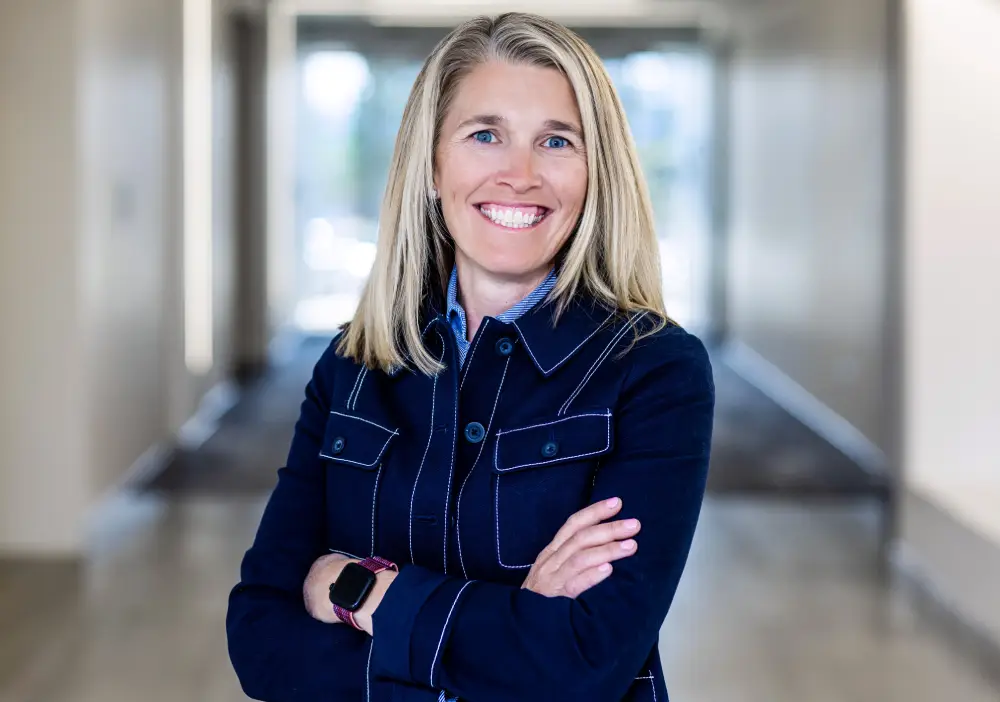
Courtney Pallotta is an energetic, customer-driven marketing executive with more than 20 years of experience leading go-to-market strategy, branding, product marketing, demand generation, and customer advocacy for startup and growth-stage companies. As CMO at EverDriven, she leads the GTM team in delivering modern, student-centered transportation solutions that meet every student’s unique needs.
Courtney has built and scaled marketing functions across some of the most dynamic enterprise technology categories, from data warehousing and analytics to cloud infrastructure, data privacy, and SaaS. She has taken companies from stealth through IPO, led acquisitions, launched open-source platforms, and consistently built marketing engines that drive pipeline and market position. Along the way, she has developed a deep belief that the best marketing is both simple and authentic, and that listening to customers is the foundation for great products and lasting communities.
Outside of EverDriven, Courtney serves as a Board Member at the Gilliam Center for Entrepreneurship, where she mentors the next generation of business leaders.