Welcome to The Right Ride: Voices Shaping the Future of Student Transportation, a video interview series from EverDriven. In it, we highlight leaders tackling the most complex challenges in getting students to school—especially students experiencing housing insecurity, students with disabilities or special education needs, and children in foster care.
This week, we sat down with Brian Moore—education leader and public safety veteran. Brian’s career bridges school safety, public safety, and educational leadership. He is the author of Practical Incident Management in K-12 Schools, and an advocate for trauma-informed leadership.
Brian brings a unique perspective about transportation: It’s not only about logistics. It’s a pathway to educational access—and sometimes it’s a lifeline.
The Myth: School Safety Stops at the Door
Brian entered education after years in public safety, and one of the first misconceptions he works to correct is that safety is limited to the school building.
“A school is not a moat,” he said. “Your whole community is part of the school. The myth is that school safety is just about what happens at school and it’s not. That bubble is a very expansive bubble and we all are partners in it.”
He explained that safety issues often begin outside the school walls. “We have issues that start on that bus that come into the bubble. We have issues that started at your home that come into that bubble… everything that happens, whether it’s on the ride home, whether it’s on the ride to school, whether it’s at home and it has a nexus to school, you need to let us know.”
From Public Safety to Educational Leadership
Brian’s path to education began when a superintendent encouraged him to bring his public safety expertise into schools.
“I said, this would be a great thing to do to take my civilian world experience and transfer that and I did it and I never looked back.”
In that role, he helped create Delaware’s first dual state police and school constable public safety agency. “Our arrests went down, but the services that we provided students that were trauma-informed all went up. Our engagement with our students increased… the level of protection that we provided students increased… and the ability to provide safer schools increased.”
Why Transportation Drivers Are Key to Student Safety
When asked for a time transportation made a difference in a student’s life, Brian shared a story from his time in the Red Clay school district.
“One of our bus drivers said, you know, here was this kid… it’s been a couple of days since she was at the stop. It turned out to be a homelessness situation and mom didn’t know who to call. Nobody would have known that the kid needed help had a bus driver not thought, [this] kid needs help.”
He believes transportation staff are uniquely positioned to spot changes in a student’s well-being. They’re in the best position to inform administrators to ensure that students get safe and equitable access to education regardless of what’s happening at home.
Designing Transportation for a Trauma-Informed Model
At charter schools, Brian sees innovation and flexibility as essential to meeting student needs.
“Sit together with some of your transportation partners and your business leaders and say, what idea haven’t we thought about? What have you always wanted to try… that you didn’t consider?”
For example, serving students from nine different districts in two counties means finding creative solutions. Many charter school students have unique needs and circumstances that require transportation approaches that are flexible, affordable, and most of all empathetic to the student experience.
For Brian, operational efficiency alone isn’t enough, “If the child does not like the experience of the bus or does not like the experience of the mode of transportation, they’re not going to get on… they’re not going to come into my building and I’m not going to be able to teach them.”
This is part of what it means to be trauma-informed.
Brian emphasized the need to prepare transportation employees and partners for changes they may encounter in the day-to-day interactions with students. “You’re not just saying hi to a kid, but you have literally five or ten seconds to look at a kid…to recognize a bruise, a mark, a change that you can then inform school staff of —and you could save that kid’s life.”
Looking Ahead: Communication as the Cornerstone
When asked about his hope for the future of student transportation and education, Brian’s answer was clear: “Access.” He went on to discuss his hope for every student to be able to get to school and communicate with staff about their needs.
His vision for 2030 is simple but urgent: “I would love for there to be a way that we can make sure that every kid who needs to feel safe has a way.”
Final Takeaways
From Brian’s perspective, building a trauma-informed, student-centered transportation system means:
- Expand the definition of school safety. Safety isn’t confined to the school building—it includes student transportation, the home, and the community.
- Recognize transportation staff as critical to safety. Drivers see every student, every day, and can spot early warning signs others may miss.
- Design for flexibility and innovation. Use multi-modal models and creative routing to meet diverse student needs across large geographic areas.
- Balance efficiency with student experience. A cost-effective system that students dislike will lead to absenteeism and lost learning opportunities.
- Train drivers to be trauma-informed. In the few seconds it takes to greet a student, a driver can notice changes and alert school staff.
- Prioritize communication. Every student should know how—and feel safe enough—to ask for help when they need it.
About the Series
The Right Ride shares insights from leaders shaping the future of student transportation. From compliance to compassion, our goal is to elevate the voices behind today’s most critical transportation solutions.
For help building a safe, student-centered transportation strategy, contact EverDriven.
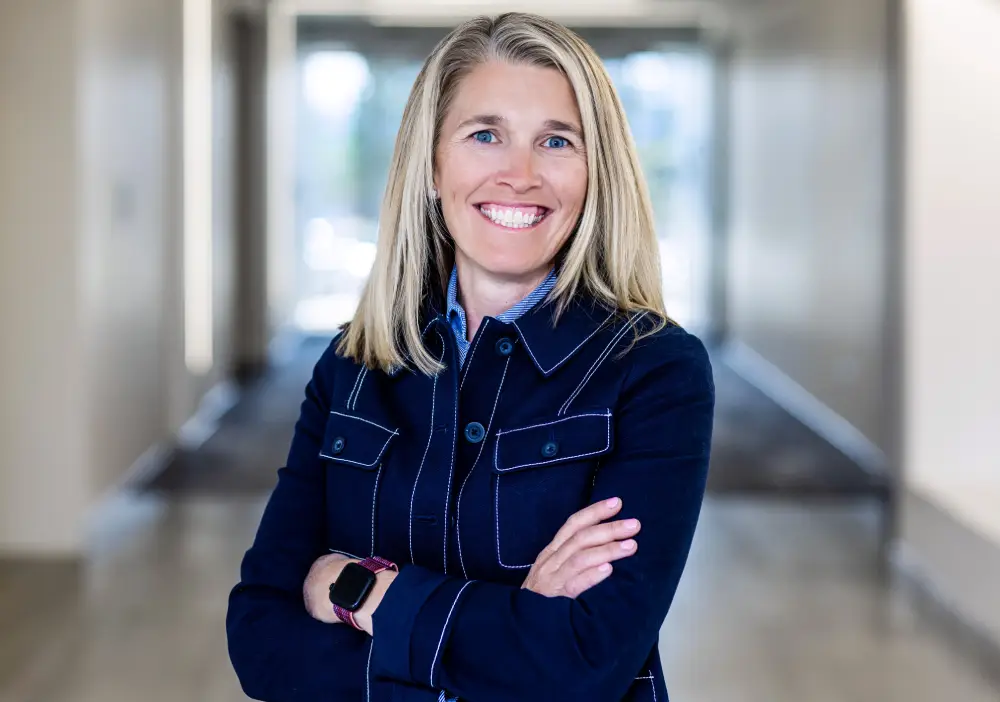
Courtney Pallotta is an energetic, customer-driven marketing executive with more than 20 years of experience leading go-to-market strategy, branding, product marketing, demand generation, and customer advocacy for startup and growth-stage companies. As CMO at EverDriven, she leads the GTM team in delivering modern, student-centered transportation solutions that meet every student’s unique needs.
Courtney has built and scaled marketing functions across some of the most dynamic enterprise technology categories, from data warehousing and analytics to cloud infrastructure, data privacy, and SaaS. She has taken companies from stealth through IPO, led acquisitions, launched open-source platforms, and consistently built marketing engines that drive pipeline and market position. Along the way, she has developed a deep belief that the best marketing is both simple and authentic, and that listening to customers is the foundation for great products and lasting communities.
Outside of EverDriven, Courtney serves as a Board Member at the Gilliam Center for Entrepreneurship, where she mentors the next generation of business leaders.